Layer 01 of 06
Design
The screens, the states and the flows. This is where my work used to end.
Desktop only, for the stores' PCs
Available as a Product Designer, UX/UI Designer or UX Lead, for remote or hybrid work in Buenos Aires.
CV (PDF)Management system · 2026
An internal system for a chain of orthopedic stores: stock, cash register and delivery notes between stores.
Six layers. Keep scrolling
Layer 01 of 06
The screens, the states and the flows. This is where my work used to end.
Desktop only, for the stores' PCs
Layer 02 of 06
The design turned into components. When something looks wrong, it's fixed in the component and changes on every screen that uses it.
React and TypeScript · about 17,000 lines
Layer 03 of 06
When a sale is voided, the system asks whether the money was returned. If it assumed either answer, someone would lose money.
Every rule, with its reason written down
Layer 04 of 06
The stock of each store and of the warehouse, the cash register, the receipts and the delivery notes. Every piece of data is stored from day one, even if the screen that shows it comes later.
Postgres
Layer 05 of 06
Each role sees and edits only what's theirs. Access control lives in the database, not in the UI.
9 of 9 permission checks
Layer 06 of 06
Automated tests, and the cash register simulated against four real spreadsheets from the business.
273 of 273 tests
Stock lived in one Excel file per store.
It was updated by hand at the end of the day, depended on a single person, and the spreadsheet that pulled everything together lost products.
I audited what was there, designed the system and built it.
The complete system: cash register, stock, warehouse, delivery notes, products, suppliers, permissions and statistics.
Finished and tested.
It passed every test and the cash register simulations with the business's real spreadsheets.
Tools: Claude Code, React, TypeScript, Supabase and Vercel.
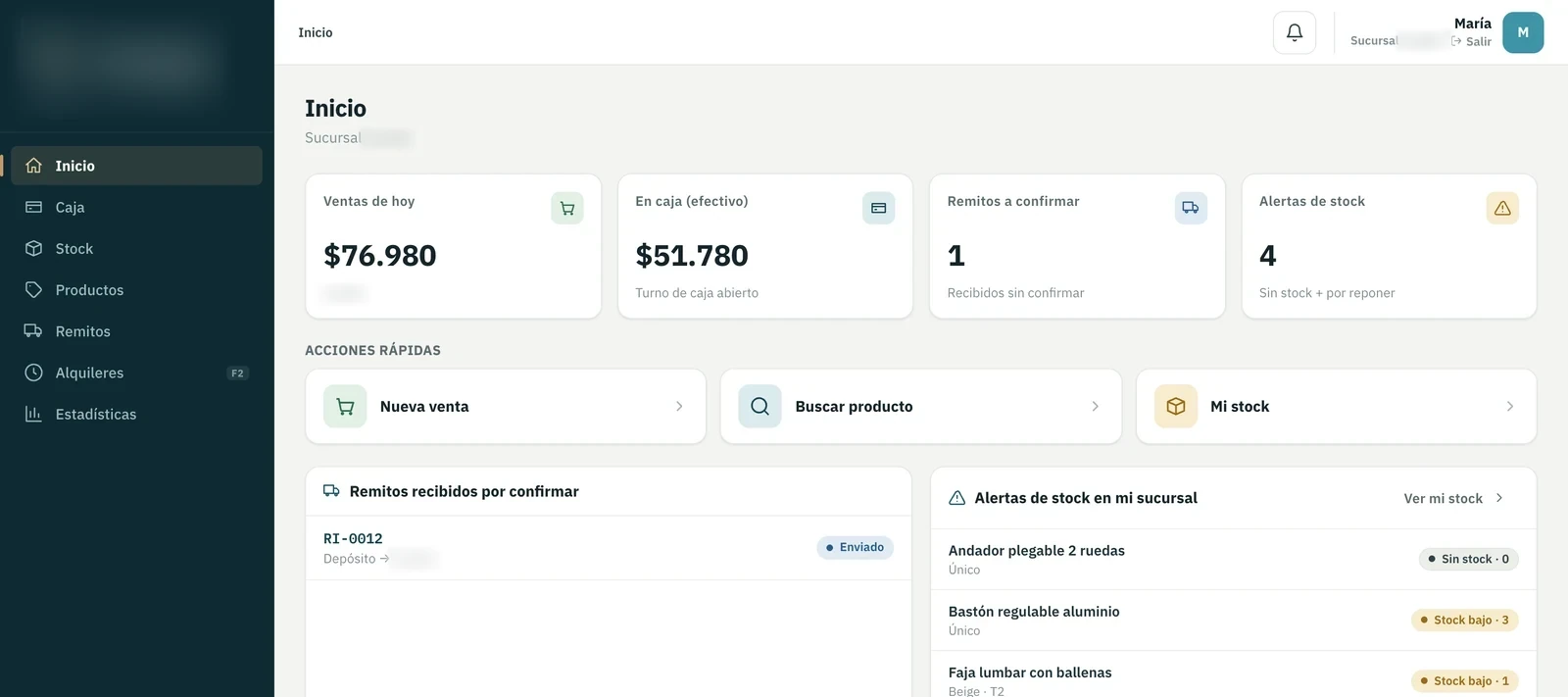
Each role lands on a different Home screen: the store sells, searches and sees its stock; the warehouse sees what to prepare and which shipments are awaiting confirmation; the office, the sales and cash of every store.
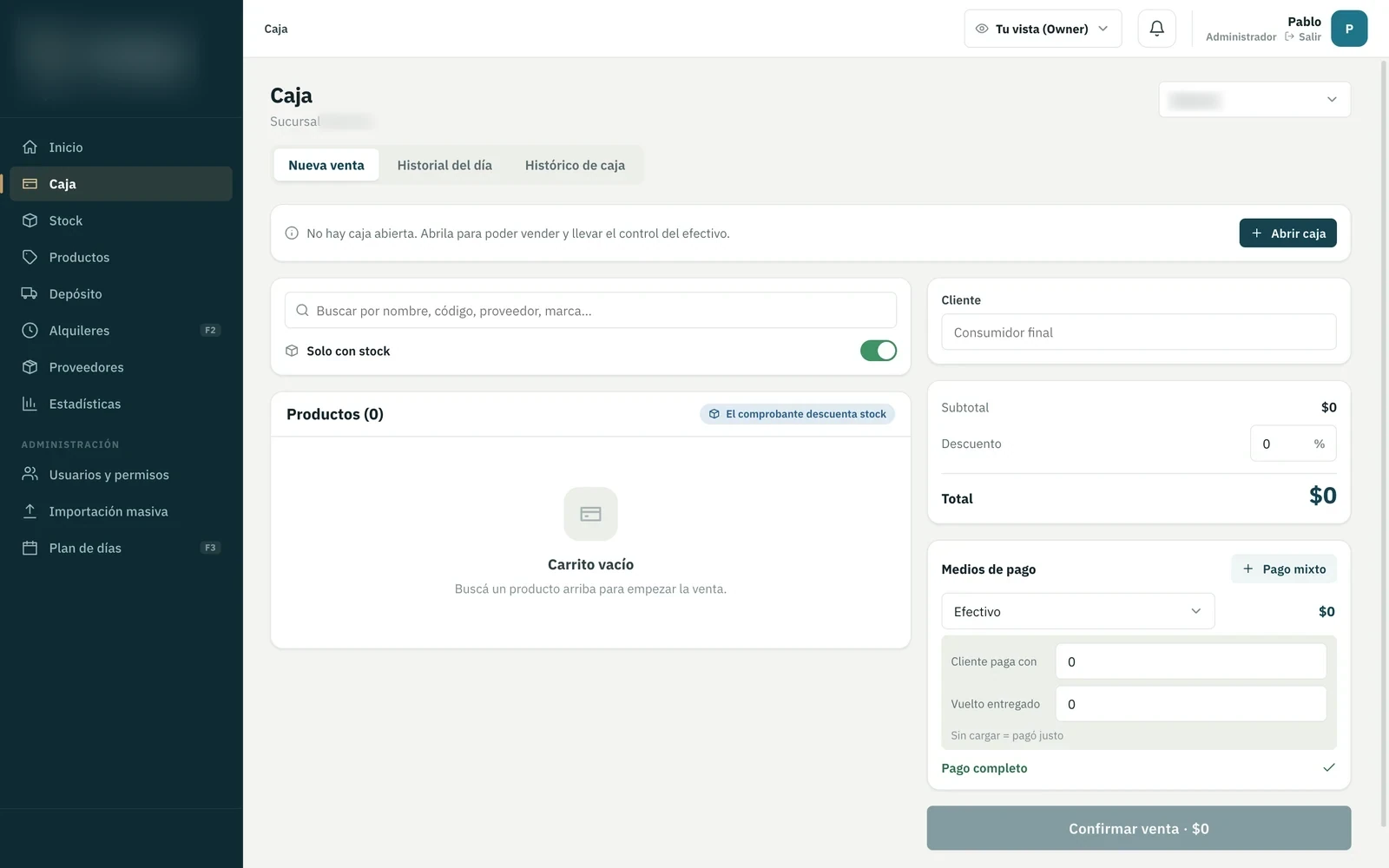
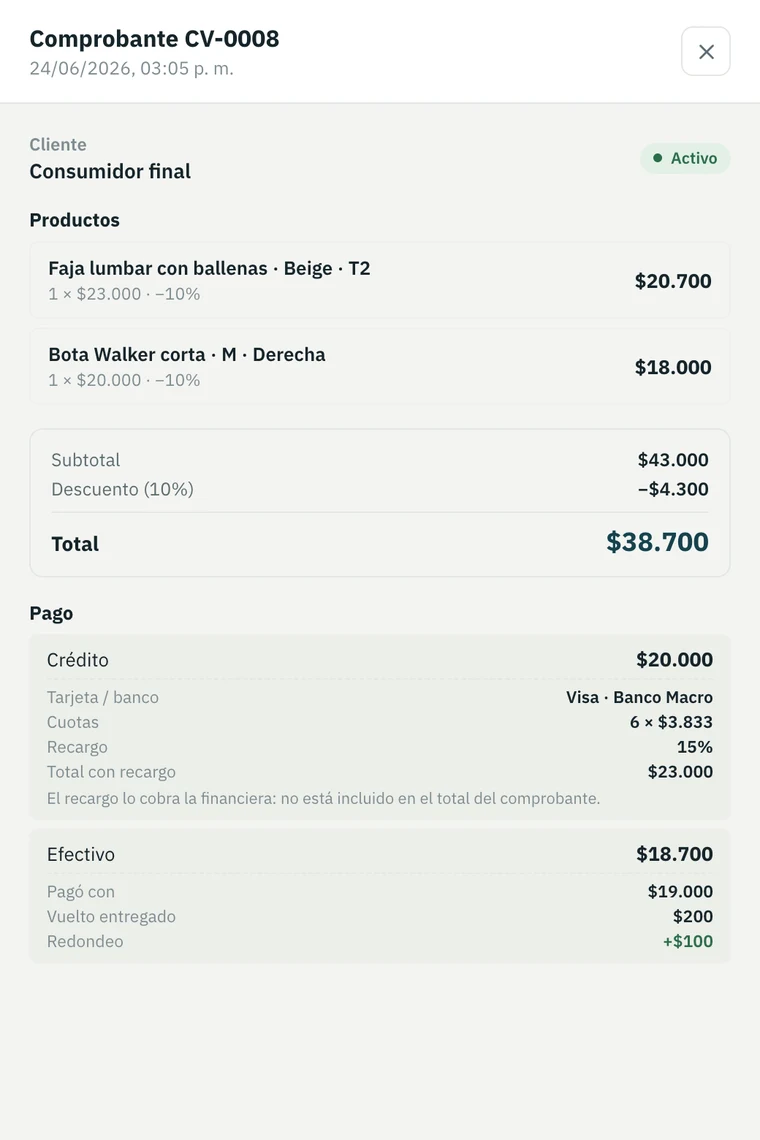
You find the product, add it to the sale and confirm, all on one screen. On confirmation, the receipt is issued and the stock is deducted.
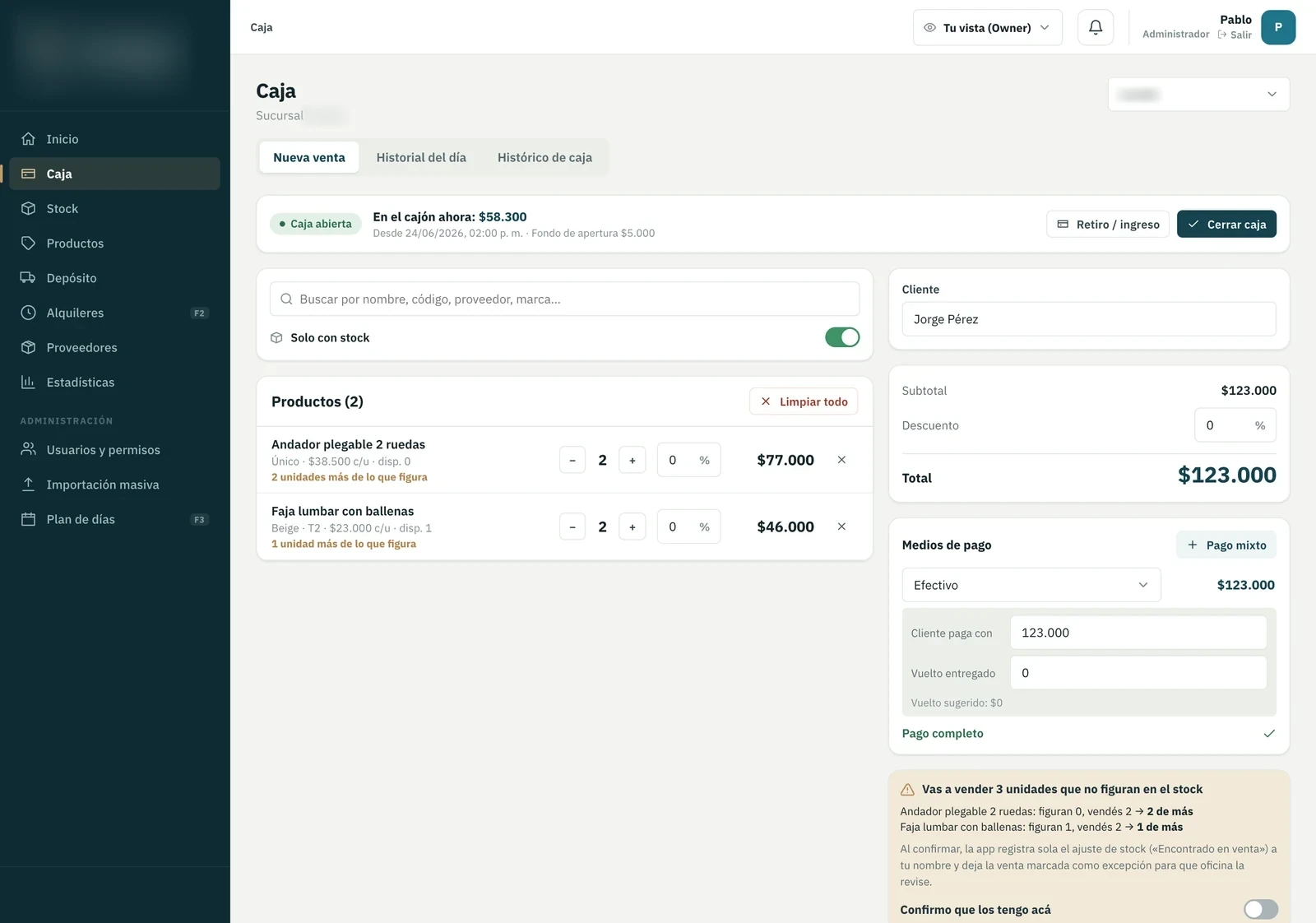
Before, you had to find the product and check the price by hand. Now you search by name, code, supplier, brand, color or size, with or without accents and capitals.
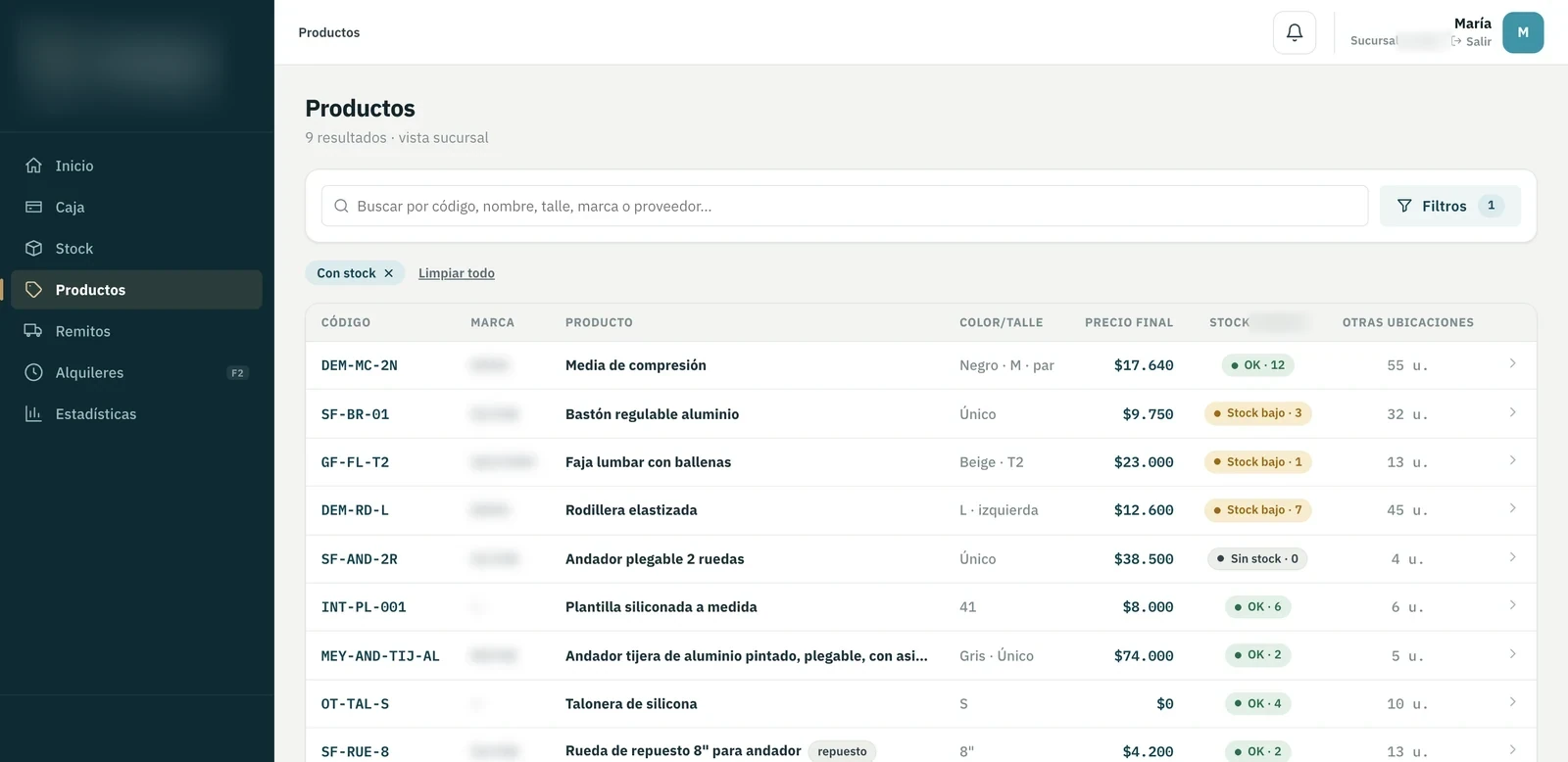
It would be used by people coming from Excel, in stores where staff rotates. The screens say “Available stock”, every button says what it does, each store signs in with one account and every product comes with its supplier.
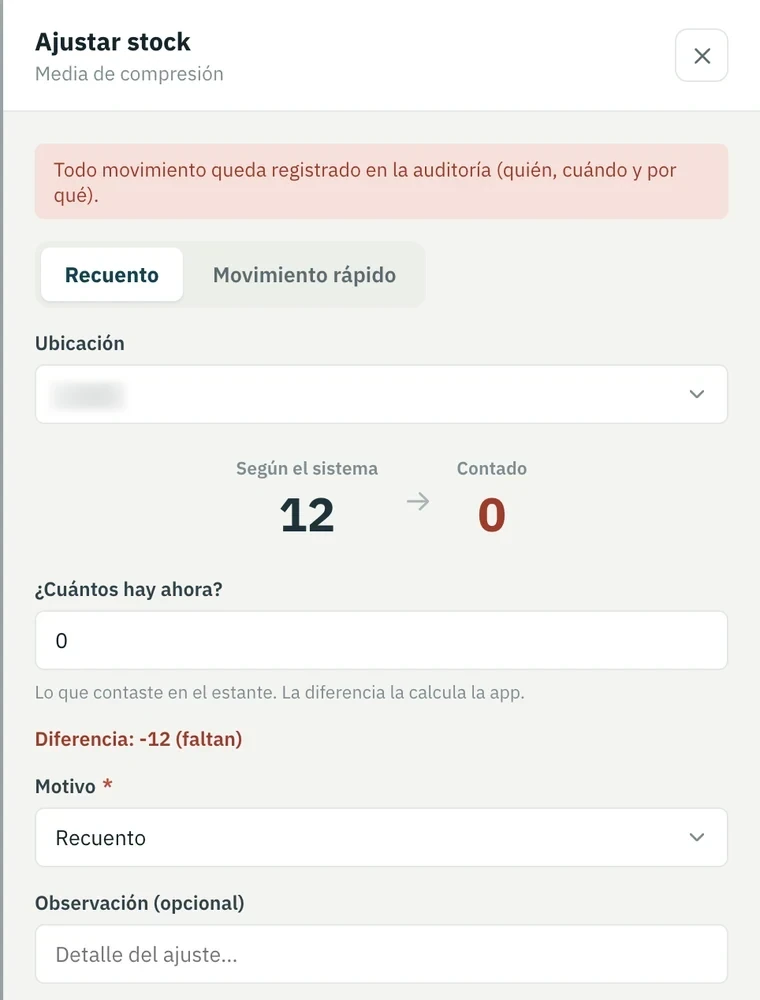
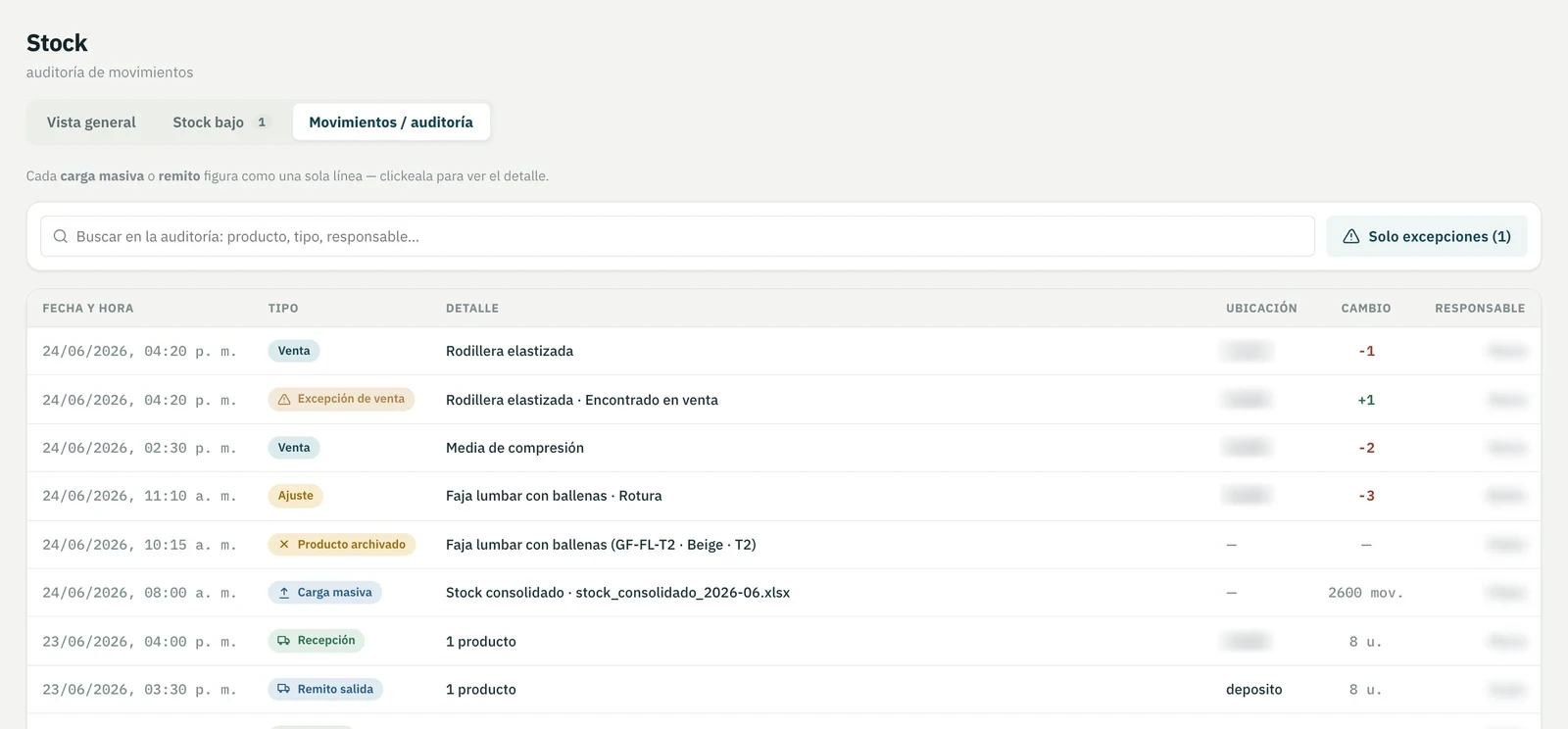
Every stock movement is logged: what changed, where, how much, why and who. The record is permanent: a manual adjustment requires a reason, and an issued receipt is locked.
The warehouse prepares and sends each internal delivery note, and the store confirms it on receipt.
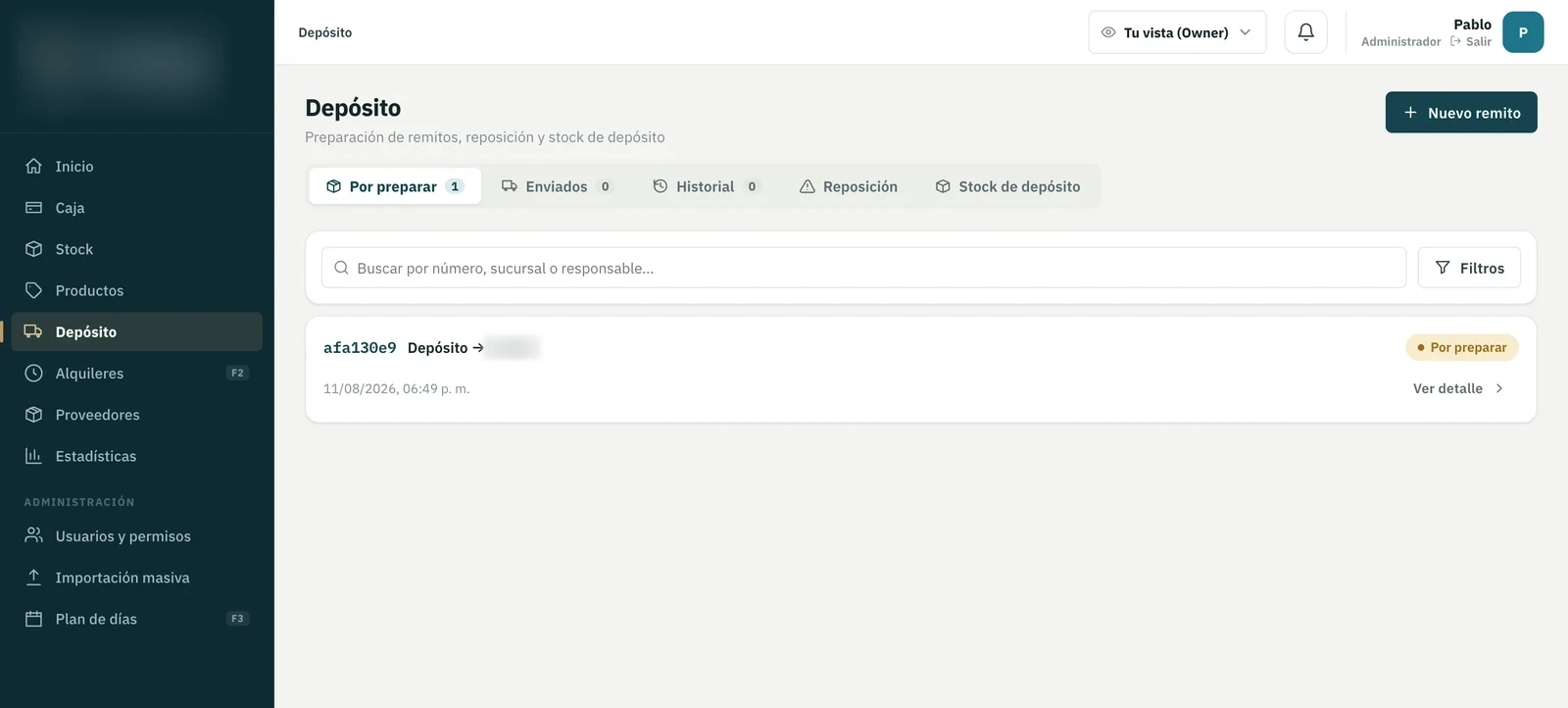
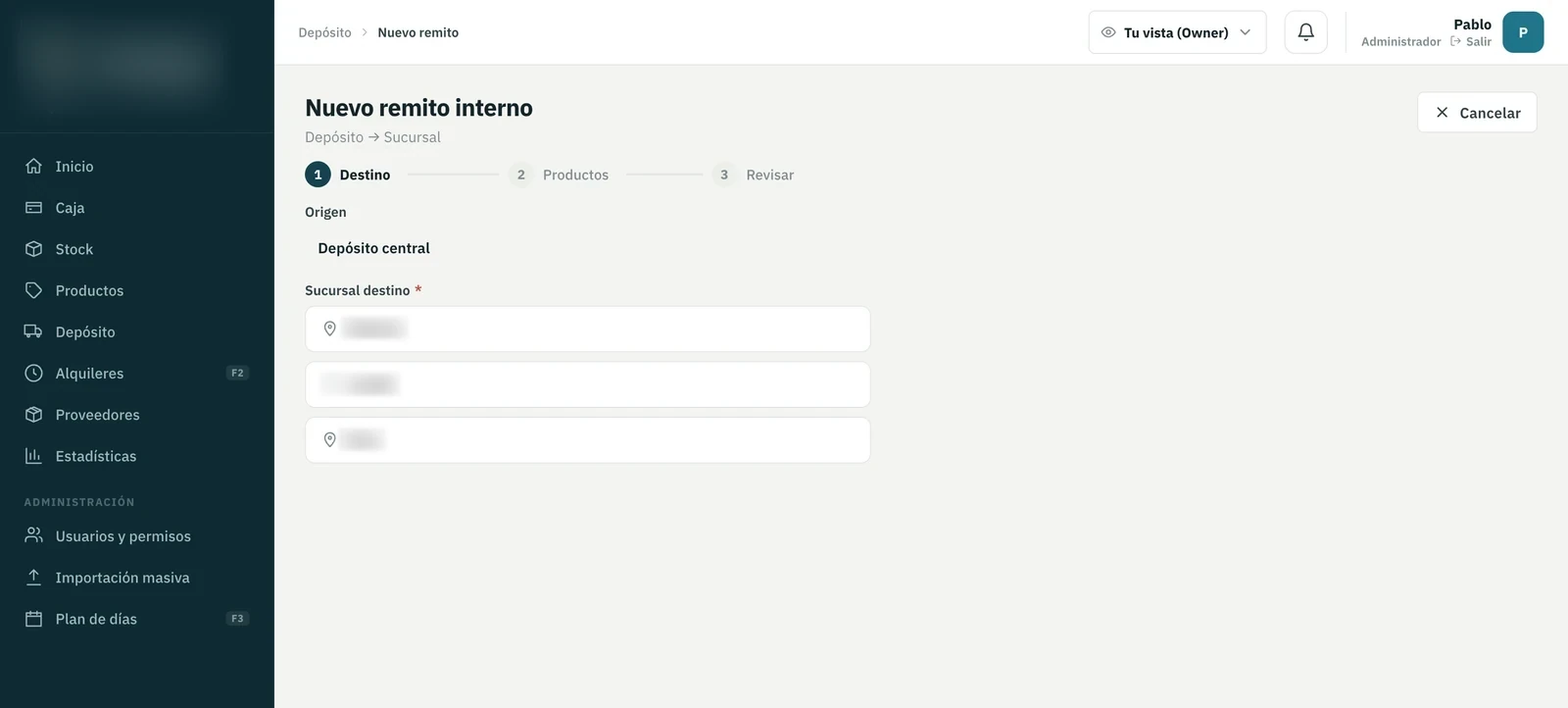
Screenshots with sample data. Brands and stores are blurred; in the audit trail, the people responsible too.
To load the stock, I built an import that first shows a review report.
The import
AI agents wrote the code. I defined what had to be built and validated every step before moving on.
From the repository, June 3 to August 9, 2026
249commits
49merged deliveries
It was the first time I built one of my own designs all the way through. I used that same way of working to build Liberty's seller dashboard.